 ultimate-guide
What Makes a Winning Director Treatment: A 2026 Guide
Table of Contents
- What Makes a Winning Director Treatment
- Director Treatment Examples That Convert
- How Long Should a Director Treatment Be
- Director Treatment Template and Layout Design
Last Updated: August 5, 2026
What Makes a Winning Director Treatment
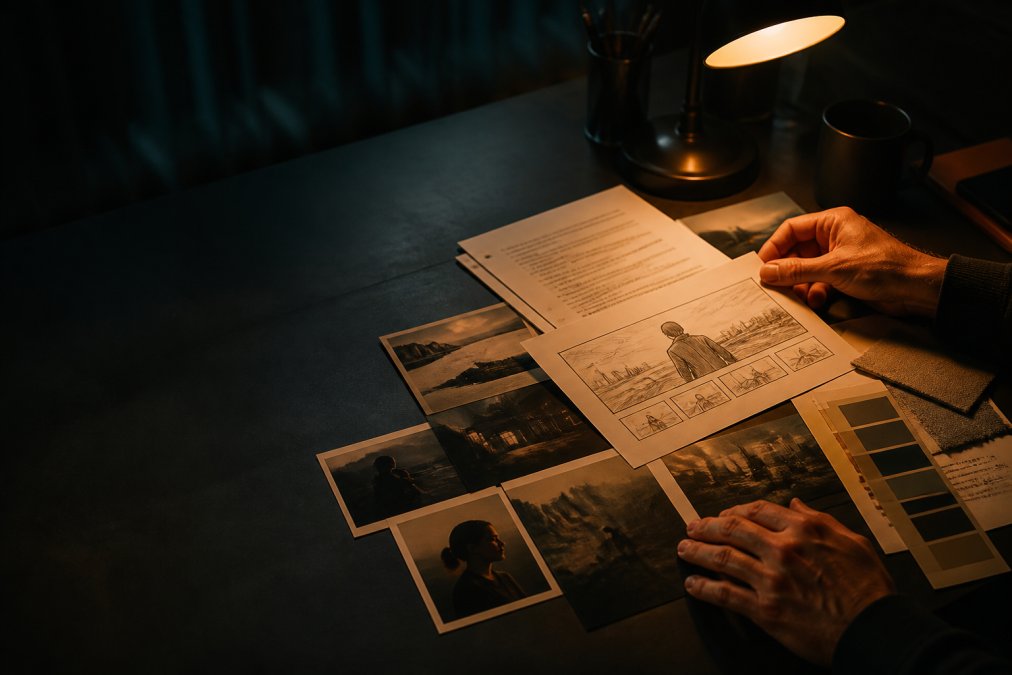
A winning director treatment is a visual argument for your creative vision, the bridge between concept and production that convinces clients and stakeholders your approach is worth backing. It communicates artistic direction with clarity, shows you understand the project's core identity, and proves you've thought through the practical and creative challenges ahead.
Across commercial filmmaking, music videos, and branded content, the pattern is consistent: winning treatments balance narrative arc with production value, carry a clear director's voice that never overshadows the client's brand, and are built to be scanned and remembered. The difference between a treatment that lands a project and one that gets passed over often comes down to execution: structure, visual coherence, and how well you connect the brief to your creative vision.
Director Treatment Examples That Convert
Real examples reveal what persuades. Treatments that convert tend to lead with visual aesthetic, ground the narrative in specific storytelling moments, and communicate production value through both language and reference imagery.
A music video treatment captures the emotional journey and mood, while a commercial treatment threads brand identity through every creative choice. Both need a compelling synopsis, usually two or three sentences that capture the core idea. The strongest examples share a clear hierarchy, room to breathe, and reference imagery chosen with intent. They spell out a specific visual language, colour palette, cinematography style, art direction, and they make the business case quietly: this vision is achievable, and it will land.
One common mistake is writing the treatment like a script. A treatment sells the approach rather than the execution detail, so the strongest examples spend less time on shot-by-shot breakdowns and more on the thinking behind them: why this aesthetic, why this narrative structure, why this production approach is right for the project.
How Long Should a Director Treatment Be
For most commercial and music video projects, two to four pages is the sweet spot, enough room to establish visual aesthetic, narrative arc, and production approach without diluting the core idea. Scope moves it either way: a 30-second commercial might compress into one or two pages, while complex branded content could justify five or six.
What you leave out matters just as much as what you keep. The strongest treatments are tightly edited, with tangential ideas and repeated descriptions cut away. Most decision-makers scan before they read closely, so the first page is doing the real work, your visual aesthetic and core concept should be clear within about thirty seconds.
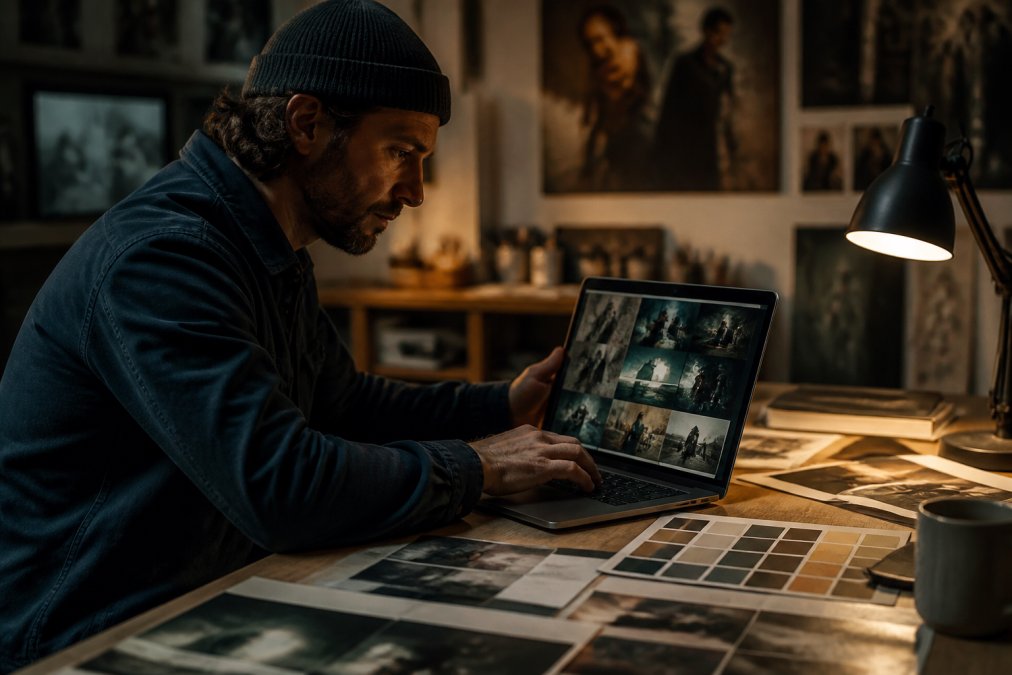
In practice, two to three pages tends to land best: roughly 800 to 1,200 words of prose plus mood board imagery and colour palette callouts. That gives you room to establish narrative flow, let the director's voice come through, and include enough reference imagery to communicate your visual language.
Director Treatment Template and Layout Design
A strong template balances structure with flexibility, guiding readers through your creative logic while maintaining visual interest.
Essential sections:
Project Title and Logline, One sentence capturing your creative thesis, not a plot summary.
Visual Aesthetic and Mood Board, 3-5 reference images establishing color palette, cinematography style, and visual language. References should feel cohesive and intentional.
Narrative Arc and Synopsis, 2-3 paragraphs describing story structure and emotional beats. Ground this in specific moments.
Director's Vision and Production Approach, Your cinematography strategy, art direction philosophy, and performance direction approach. This is where your director's voice becomes unmistakable.
Technical and Practical Considerations, Briefly address timeline, locations, talent approach, and special requirements. This proves feasibility without overwhelming creative sections.
Brand or Client Connection, For commercial work, state how your creative approach serves brand objectives. For music videos, explain how visual language amplifies the song's emotional core.

Layout matters as much as content. Use consistent typography, generous margins, and strategic white space, a cluttered treatment reads as chaotic before a word is taken in. Use bold or colour to highlight key concepts, and include page numbers and a clean header with the project title and date.
Most winning treatments are delivered as PDFs, for consistency and control over how they appear across devices, so your visual references, color palette and typography display exactly as intended.
Crafting Your Director's Voice and Creative Vision
Your director's voice is what separates a competent treatment from a memorable one, the through-line of creative perspective that makes a stakeholder think, "This is the person who should direct this project."
That voice comes from specificity and intentional choices that reflect your artistic perspective. If you favour intimate, handheld cinematography or bold production design, it should be visible in both your treatment and your reference imagery.
The strongest treatments carry a distinct perspective while still serving the client's brand and objective, the voice enhances the client's vision rather than competing with it. The trap to avoid is letting directorial ego take over.
Every major creative choice should be defensible. Why this colour palette? Because it reinforces the emotional tone and creates visual contrast. Why this cinematography approach? Because it builds intimacy and keeps attention on performance. Why this narrative structure? Because it earns an emotional payoff.
Stakeholders don't need to agree with every choice, but they should be able to follow the logic, that's what makes a treatment read as confident and considered. A useful exercise: for each major decision, write one sentence explaining the reasoning, then delete it. The clarity carries into the writing without you having to spell it out.
Frequently Asked Questions
What should a director treatment include?
A winning director treatment combines visual storytelling with clear narrative structure. It should feature a compelling synopsis, your unique director's voice and creative perspective, a detailed visual aesthetic with mood boards and color palette references, cinematography and art direction notes, the narrative arc and story logic, and action-oriented language that connects your vision to the client's brand identity. The treatment serves as both a creative brief and a pitch document that demonstrates your understanding of the project's production value and your approach to bringing it to life.
How do you visually communicate your vision in a director treatment?
Use reference imagery, mood boards, and a defined color palette to establish your visual language. Include specific cinematography notes, art direction details, and examples of the visual aesthetic you'll achieve. Show how your creative vision aligns with the brand's identity through consistent visual language throughout the document. The layout design itself should reflect your director's perspective—use typography, spacing, and imagery placement to guide the reader through your narrative arc and demonstrate your understanding of visual communication.
What are the most common mistakes in a director treatment?
The biggest mistakes are losing your director's voice through generic language, overwhelming the reader with too much information instead of concise communication, failing to connect your creative vision to the client's actual brand requirements, using weak or mismatched reference imagery, and neglecting the narrative arc in favor of scattered visual ideas. Many treatments also fail to demonstrate understanding of production value or how the concept will actually execute. Additionally, poor file optimization, accessibility issues, and unclear layout design can undermine even strong creative ideas.
How do you balance creative vision with client requirements in a pitch?
Start by deeply understanding the client's brief and brand identity, then propose solutions that honor both your creative perspective and their objectives. Your treatment should show how your unique director's voice enhances their goals, not contradicts them. Use your visual aesthetic, storytelling approach, and cinematography notes to demonstrate that your creative vision is the right vehicle for their message. The key is positioning your ideas as the solution to their needs, not as art for its own sake. Strong treatments prove that bold creative choices and client expectations aren't opposing forces.
How long should a director treatment be for maximum impact?
Most winning treatments run 5-8 pages for commercials and branded content, with 8-12 pages acceptable for complex music video or campaign treatments. Length matters less than concise communication and visual impact. Each page should advance your narrative arc and strengthen the client's understanding of your creative vision. Avoid filler—every section should justify its space. A tightly written 5-page treatment with strong visual language and mood boards outperforms a 15-page treatment with weak prose and scattered ideas. Focus on clarity and production value over word count.
What file format and optimization should I use for my treatment?
PDF presentations are the industry standard for director treatments—they preserve layout design, color accuracy, and visual aesthetic across all devices and operating systems. Ensure your file is optimized for both desktop and mobile viewing, with file size under 10 MB for fast loading. Use accessible fonts and sufficient contrast for readability. Include metadata with your name and project title. Consider web-based treatment options if the client prefers interactive viewing. Always test your final file on multiple devices before sending, and include a backup format option if the client requests it.
Can I use AI tools to help create my director treatment?
AI can assist with layout design suggestions, copywriting refinement, and organizing your creative brief into structured prose. However, the core creative vision—your director's voice, visual aesthetic choices, narrative arc, and unique perspective—must remain authentically yours. Use AI as a production tool to speed up formatting or to polish language, but not to replace your creative thinking. The treatments that win are those with a clear, recognizable director's perspective. Clients hire you for your specific creative vision, not for generic AI-generated ideas. The most effective approach integrates AI efficiency with your irreplaceable artistic voice.