 ultimate-guide
Creative Support for Commercial Production: A 2026 Guide
Table of Contents
- What Creative Support Actually Does in Commercial Production
- Commercial Video Production Workflow: Where Creative Support Fits
- Video Production Project Management Tools and Integration
- Creative Production Agency Services: Full-Service Collaboration
Last Updated: August 6, 2026
What Creative Support Actually Does in Commercial Production
Creative support is the strategic guidance and design expertise that turns a rough concept into a winning pitch. More often than not, it's what decides whether an idea lands or gets passed over, the collaborative process where narrative, visuals, and strategy line up to make your vision unmistakable.
When a director, producer, or agency team develops a commercial concept, they're juggling several layers at once: the client's brief, the creative vision, technical feasibility, and the competitive landscape. Creative support fills the gaps. It elevates the narrative arc, sharpens the visual language, and builds presentations that communicate what you'll shoot and why it matters. The point isn't to rewrite your idea. It's to make the idea you already have sharper, bolder, and more persuasive.
Most of that work lives in three areas: narrative development (strengthening story structure and emotional resonance), visual strategy (defining a cohesive aesthetic that matches brand and concept), and pitch design (translating concepts into compelling treatment documents and decks that win clients). For production companies, it means faster pitch turnaround without losing depth. For agencies, standout treatments that set campaigns apart. For freelance directors and producers, it's dependable support when you're working solo or in a small team.
The best creative support shows up in how it collaborates. A strong partner amplifies your vision rather than steering it somewhere else, asking the right questions, spotting what isn't landing, and shoring up weak spots before the client ever sees them. The process works best as a conversation rather than a set of instructions; you keep creative control while gaining expertise that speeds up development and lifts win rates.
Commercial Video Production Workflow: Where Creative Support Fits
Creative support strengthens each phase of the typical commercial workflow: brief to concept to treatment to pitch to production.
The workflow begins with the creative brief, client objectives, target audience, tone, and deliverables. Your team translates this into initial concepts. Creative support becomes valuable here by stress-testing ideas against the brief, identifying narrative gaps, and suggesting visual directions aligned with brand strategy and production logistics.

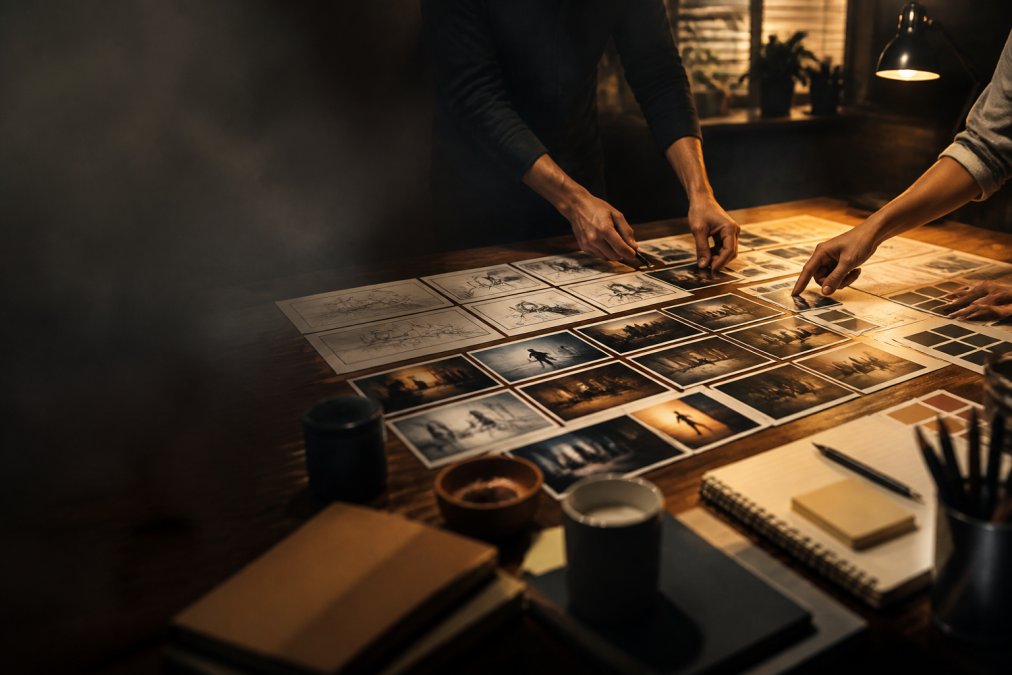
Once concepts are validated, the treatment phase begins. A creative support partner accelerates this by handling design, narrative refinement, and presentation architecture. For music videos, this means developing visual treatments that interpret the song's emotional arc. For branded content, it means crafting narrative frameworks that weave brand messages into authentic stories. For commercials, it's building 30-second or 60-second narratives that land emotionally and drive action.
The pitch itself benefits from strategic positioning. Creative support ensures your deck tells a story, not just lists ideas. It frames your approach within the brief context, demonstrates feasibility, and positions your production company as the clear choice.
Video Production Project Management Tools and Integration
Creative support integrates with the tools your team already uses. Most production teams combine project management platforms (Asana, Monday.com, ClickUp), design tools (Adobe Creative Suite, Figma), cloud storage (Google Drive, Dropbox), and communication platforms (Slack, email).
When a creative support partner has access to your project workspace, they see the brief, review existing assets, track feedback iterations, and deliver files directly into your workflow. This eliminates email back-and-forth and ensures version control. For agencies managing multiple concurrent pitches, this integration prevents bottlenecks. For production companies, it means seamless handoff from pitch to pre-production. For freelancers, it means clarity on responsibilities and deliverable locations.
Technical delivery matters too. Treatments need to be formatted for client review as presentation-ready PDFs. Final assets need organized labeling for production teams. A partner who understands your file structure and delivery standards saves time and prevents miscommunication.
Creative Production Agency Services: Full-Service Collaboration
Full-service creative production agencies provide strategic partnership across the entire commercial production journey, not just treatment design.
A full-service agency starts with the brief and works alongside your team through pitch, pre-production, production, and post-production planning. They're creative strategists who understand how narrative, visual identity, and production logistics interconnect. They shape concepts, identify production challenges early, and propose solutions balancing creative ambition with feasibility.

Services typically include creative direction (defining the visual and narrative approach), treatment design (structuring concepts into compelling presentations), pitch deck development (building persuasive decks that win clients), and pre-production consultation (translating concepts into production plans). For music videos, that means developing visual treatments and consulting on production design; for branded content, building narrative frameworks that weave brand messaging in authentically.
The collaboration model is what really separates a full-service partner from a freelance designer. Instead of handing off a brief and waiting weeks for a deck to come back, you work with an embedded partner who sits in on creative meetings, reviews concepts in real time, iterates as feedback comes in, and makes sure the final pitch reflects the vision you actually had.
The Moon Unit works this way, shaping standout treatment designs and pitch decks across commercials, music videos, and branded content, and collaborating closely with creative teams to elevate the narrative and carry a presentation through a clear visual strategy. That approach is backed by more than 8,000 pitches across 40 countries.
Whether to keep creative support in-house or outsource it comes down to pitch volume, team size, and creative complexity. A small production company pitching occasionally might bring in outside support on demand. A larger agency pitching weekly might keep resources in-house and lean on a partner for overflow. A freelance director might team up with a full-service partner for every pitch.
Done well, creative support changes how production companies, agencies, and directors approach a pitch. Fold strategic guidance, treatment design, and pitch deck development into your workflow, and you shape concepts faster, communicate the vision more clearly, and win more often. The Moon Unit brings that expertise to directors, producers, and agencies across commercials, music videos, and branded content, helping teams turn strong ideas into pitches that win.
Frequently Asked Questions
What's the actual difference between creative support and traditional production management?
Production management handles logistics, budgets, and scheduling. Creative support shapes the narrative, elevates visual strategy, and ensures your idea stands out in the pitch. Think of it this way: management keeps the train on track; creative support makes sure the train goes somewhere worth going. Creative support for commercial production focuses on the story, the treatment design, and the strategic vision that wins clients.
How do you ensure creative support doesn't override my voice or creative direction?
The best creative support is collaborative, not directive. Your vision sets the foundation. A strong partner asks questions, offers bold ideas, and refines what you've started—but the final voice remains yours. Look for partners who emphasize collaboration and ask about your process before they pitch solutions. Confidentiality and creative ownership should be non-negotiable from day one.
Can creative support services handle tight deadlines like 48-hour turnarounds?
Some can, but it depends on scope and team size. A quick treatment refresh or pitch deck polish is feasible on a tight timeline. A full-service production workflow integration or comprehensive narrative overhaul needs more breathing room. Discuss your deadline upfront and be clear about what 'done' looks like. Smaller teams may have more flexibility than you'd expect, so don't assume size equals speed.
How do I measure whether creative support actually improved my pitch success rate?
Track conversion metrics: pitches submitted, pitches won, and client feedback. Before and after data is powerful. Ask your creative partner about their experience with similar projects—what percentage of pitches they've supported actually closed. ROI isn't just about winning every pitch; it's about winning the right ones faster and with less back-and-forth revision.